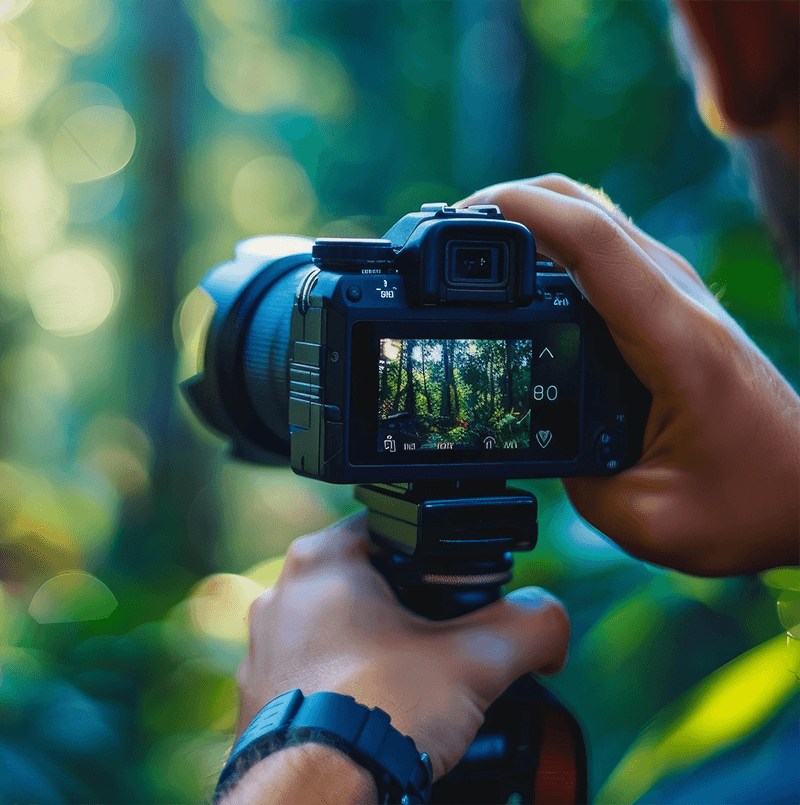
10 Common Photography Mistakes Beginners Make (and How to Avoid Them)
Learning photography is one of the most rewarding hobbies you can take up. Modern cameras are capable of producing stunning images, but many photographers make the same mistakes when they first start out.
The good news is that most of these mistakes are easy to fix once you know what to look for.
1. Shooting Everything in Auto Mode
Auto mode is useful, but it can slow your progress as a photographer. Learning how aperture, shutter speed and ISO affect your images gives you far more creative control.
Aperture Priority mode is often an excellent stepping stone between Auto and Manual mode.
2. Ignoring the Direction of Light
Photography literally means drawing with light, yet many beginners focus on the subject and forget about the light itself.
Before taking a photograph, ask yourself where the light is coming from and whether it helps or hinders your image.
3. Standing Too Far Away
A common mistake is trying to include too much in a photograph.
Often the simplest improvement is to move closer and fill more of the frame with your subject.
4. Focusing on Equipment Instead of Technique
Many photographers believe a new camera or lens will solve their problems.
In reality, understanding composition, light and camera settings usually has a much bigger impact than buying new gear.
5. Not Checking the Background
A distracting background can ruin an otherwise excellent photograph.
Before pressing the shutter, check for clutter, bright distractions and unwanted objects in the frame.
6. Crooked Horizons
Tilted horizons are one of the most common landscape photography mistakes.
Most cameras include an electronic level and almost all editing software allows horizons to be straightened afterwards.
7. Using the Wrong Shutter Speed
Blurred images are often caused by shutter speeds that are too slow for the subject or lens being used.
Understanding how shutter speed affects motion is one of the key building blocks of photography.
8. Taking Too Few Photographs
Digital photography makes experimentation inexpensive.
Try different viewpoints, compositions and settings. The more you practise, the faster you improve.
9. Over-Editing Images
Editing should enhance a photograph, not overpower it.
Over-saturated colours and excessive sharpening can quickly make an image look unnatural.
10. Not Enjoying the Process
Perhaps the biggest mistake of all is becoming so focused on technical perfection that you stop enjoying photography.
Remember that every photographer, regardless of experience, is still learning.
Final Thoughts
Making mistakes is part of learning photography. In fact, many of the lessons that improve your photography come from understanding what went wrong and trying again.
Keep practising, keep experimenting and, most importantly, keep enjoying the process.
Frequently Asked Questions
How long does it take to learn photography?
Most people become comfortable with the basics within a few weeks, but photography is a skill that continues to develop throughout your life.
Do I need an expensive camera to take good photographs?
No. Understanding light, composition and camera settings is usually far more important than owning the latest equipment.
What is the fastest way to improve my photography?
Practice, feedback and learning from your mistakes. Many photographers find that personalised tuition accelerates progress significantly.
Want to Improve Faster?
One of the advantages of one-to-one photography training is that many of these mistakes can be identified and corrected very quickly.
Whether you use Fujifilm, Canon, Nikon, Sony, Panasonic or another camera system, personalised tuition can help you gain confidence and start taking better photographs sooner.